Concrete Floors and Open Doors: The Dance Collectives Turning Forgotten Spaces Into Community Stages
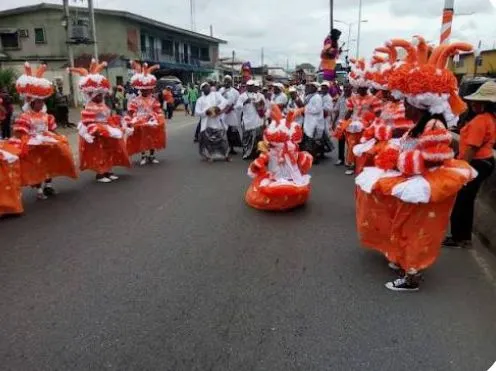
Photo: Phina001, CC BY 4.0, via Wikimedia Commons
The building used to be a mattress store. Before that, a furniture outlet. For a stretch of years, it was just a boarded-up eyesore on a block in East Los Angeles that most people drove past without thinking twice. Today, on any given Saturday night, it's packed — bodies moving, music pulsing, the air thick with the particular electricity that only live performance can generate.
This is what it looks like when dancers stop waiting for a theater to let them in.
All across the country, a quiet but powerful shift is underway. Dance collectives, independent choreographers, and community arts organizers are reclaiming the forgotten margins of American cities — vacant lots, decommissioned factories, church basements, parking structures after hours — and transforming them into something the traditional performing arts world rarely manages to be: genuinely accessible.
It's scrappy, it's creative, and it's changing who gets to make dance and who gets to see it.
The Access Problem No One Wants to Talk About
Let's be direct about something: traditional dance venues are expensive. Renting a proper black box theater in a major US city can run anywhere from a few hundred to several thousand dollars for a single evening. Add in production costs, lighting, sound, and marketing, and you've got a financial barrier that effectively walls out a huge portion of the dance community — particularly emerging artists, artists of color, and anyone working outside the commercial mainstream.
The result is a presenting ecosystem that, despite its best intentions, tends to reflect the economic and cultural priorities of the institutions controlling the spaces. Work that's legible to grant committees and board members gets staged. Work that challenges, disrupts, or simply exists outside that framework often doesn't.
"We spent years applying for residencies and venue support and getting very polite rejections," says Danielle Osei, co-founder of Groundwork Movement Collective, a dance organization based in Detroit that has been activating non-traditional spaces since 2019. "At some point we had to ask ourselves — are we going to keep waiting for someone to open a door, or are we going to build our own?"
They built their own. Groundwork now operates out of a converted auto shop in the Mexicantown neighborhood, running weekly open rehearsals, youth workshops, and a monthly performance series that has become a genuine community anchor.
What These Spaces Actually Do
The practical case for unconventional venues is obvious enough — lower cost, more control, less bureaucratic friction. But the artists working in these spaces will tell you that something more interesting happens when you take dance out of the traditional theater context.
The architecture changes the work. A concrete floor moves differently than sprung hardwood. High industrial ceilings invite vertical exploration. Outdoor spaces introduce weather, ambient sound, the unpredictability of public life. These aren't just logistical variables — they're creative ones.
"When we performed in the parking structure, the pillars became part of the choreography," says Roberto Sanchez, a choreographer and community organizer in San Antonio whose collective, Tierra Dance Project, has staged work in everything from community gardens to the covered walkways of a shuttered shopping mall. "You can't ignore where you are. The space talks back to you. I actually think it makes for better work — more specific, more honest about where it comes from."
There's also something that happens to audiences when they experience dance outside a formal theater. The social contract shifts. People who might never set foot in a performing arts center — who might feel, consciously or not, that those spaces aren't for them — show up. Neighbors wander over. Kids watch from stoops. The work becomes part of the neighborhood's texture rather than an event you have to opt into.
The Wellness Dimension
It might seem like a stretch to frame this as a wellness story, but the people doing this work see it that way themselves — and not just metaphorically.
For many of the artists and communities involved, access to dance and creative movement is a genuine health issue. Research consistently links regular physical and creative engagement to reduced stress, stronger social bonds, and improved mental health outcomes. When dance only lives in expensive venues in wealthy neighborhoods, those benefits don't reach the communities that arguably need them most.
"Movement is medicine," says Osei, without a trace of irony. "When we run a free workshop in our space, we're not just teaching dance. We're giving people a place to come and be in their bodies without judgment. For a lot of our participants — especially young people — that's something they don't have anywhere else."
Groundwork has partnered with local mental health organizations to offer movement-based programming as a complement to traditional therapeutic services. The auto shop, with its scuffed floors and exposed ductwork, has become something genuinely therapeutic — not despite its roughness, but partly because of it. It doesn't ask anyone to perform being the kind of person who goes to fancy arts events. You can just show up.
The Challenges Are Real
None of this is without friction. Zoning issues, insurance requirements, noise ordinances, and the ever-present threat of gentrification-driven displacement make operating in non-traditional spaces genuinely complicated. Several collectives interviewed for this piece described being forced out of spaces they'd invested years building up, as rising property values made landlords suddenly interested in buildings that had sat dormant for decades.
"There's a painful irony in it," says Sanchez. "We come into a neighborhood, we make it more vibrant, we build community — and then the neighborhood becomes 'desirable' and we can't afford to be there anymore. It's a cycle we have to be really intentional about breaking."
Some collectives are responding by pursuing ownership rather than tenancy — a harder lift, but one that provides genuine long-term stability. Others are building explicit anti-displacement commitments into their organizational structures, partnering with community land trusts and neighborhood associations to ensure that the cultural work they're doing doesn't inadvertently price out the communities it's meant to serve.
A Different Vision of What Dance Can Be
At the end of the day, what these collectives are building is more than just alternative performance venues. They're articulating a different vision of what American dance culture could look like — one that isn't organized around the priorities of major institutions and their donors, but around the actual needs and creative energies of diverse communities.
It's messier than a Lincoln Center gala. The floors aren't always clean. Sometimes the sound system is a Bluetooth speaker and a prayer. But the work happening in these spaces is alive in a way that's hard to manufacture, and the people making it are doing so with a clarity of purpose that's genuinely inspiring.
Dance has always found a way. In church halls and ballrooms, on street corners and subway platforms, in living rooms and parking lots and converted mattress stores in East LA. The spaces change. The need to move, to connect, to make something together — that stays constant.
And right now, all across this country, people are building the floors to dance on.