Your Brain on Beat: What Neuroscience Is Finally Telling Us About Dance and Mental Health
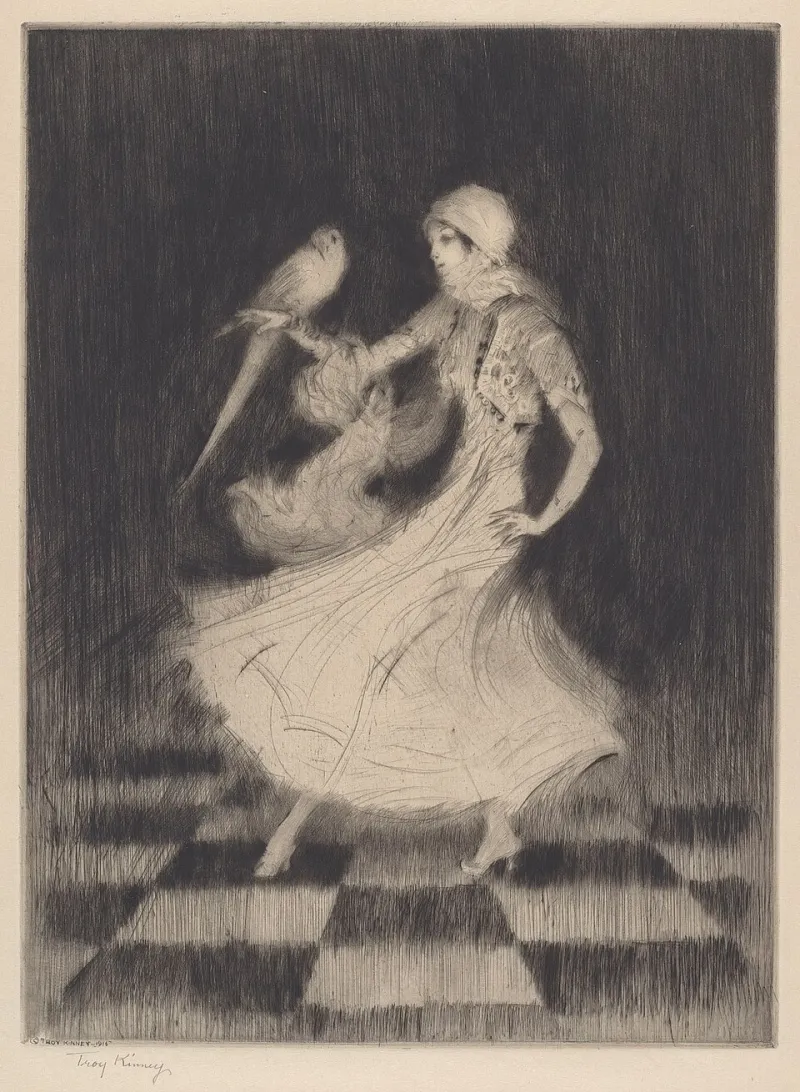
Photo: Troy Kinney, CC0, via Wikimedia Commons
When Your Body Moves, Your Brain Lights Up
There's a moment every dancer knows — that sweet spot somewhere between the second and third song when the noise in your head goes quiet and everything just clicks. You stop thinking about your grocery list, your ex, your overdue rent. There's only the music and the movement. Dancers have been chasing that feeling forever. Scientists, it turns out, have finally started chasing it too.
Over the last decade, neuroscience research has been quietly building a case for what the dance community has always felt intuitively: choreographed movement doesn't just exercise your muscles. It fundamentally changes the way your brain functions. And the implications for mental wellness — particularly in a post-pandemic America where anxiety and depression rates remain stubbornly high — are nothing short of remarkable.
"Dance hits the brain in a way that almost nothing else does," says Dr. Shanna Kaye, a cognitive neuroscientist at the University of Southern California who has spent the better part of eight years studying movement and neuroplasticity. "You're engaging motor planning, emotional processing, social connection, rhythm synchronization, and proprioception all at once. It's like a full-brain workout happening in real time."
The Dopamine-Dance Connection
At the center of the conversation is dopamine — the neurotransmitter most commonly associated with pleasure, motivation, and reward. When you anticipate and then execute a movement phrase in sync with music, your brain releases dopamine. When you nail a combination you've been struggling with for weeks? More dopamine. When you move in sync with a group of other dancers? You guessed it.
But it goes deeper than a simple reward hit. Research published in the Frontiers in Psychology journal found that rhythmic movement specifically — the kind baked into choreography — activates the basal ganglia and the cerebellum simultaneously, creating what researchers describe as a "neurological harmony" that calms the amygdala, the brain's fear and stress response center. In plain terms: dancing turns down the volume on anxiety.
Dr. Marcus Tello, a psychiatrist and movement therapist based in Chicago who works with both clinical patients and professional dancers, puts it this way: "The amygdala is basically your brain's alarm system. Chronic stress keeps that alarm blaring. Rhythmic, intentional movement — especially when it involves learning and memory, like choreography does — is one of the most effective ways we've found to regulate that system without medication."
That's not a knock on medication, he's quick to add. But it is a powerful argument for taking dance seriously as a mental health tool.
Flow State Is Real — And Dance Gets You There Fast
Psychologist Mihaly Csikszentmihalyi introduced the concept of "flow state" back in the 1970s — that experience of being so absorbed in an activity that self-consciousness disappears and time seems to bend. Athletes talk about it. Musicians live for it. And dancers? Dancers practically invented it.
What's new is that brain imaging technology has let researchers actually watch flow happen. During deep flow states, the prefrontal cortex — the part of the brain responsible for self-monitoring and self-criticism — temporarily quiets down in a process called transient hypofrontality. You literally stop judging yourself. The inner critic goes offline.
"Dance is one of the fastest pathways to flow state that we've identified," says Dr. Kaye. "The combination of music, physical challenge, and social context creates optimal conditions for transient hypofrontality almost immediately. That's why people feel so good after a class, even if they can't explain why."
For Maya Delacroix, a 34-year-old contemporary dancer and choreographer based in Brooklyn, that explanation finally gave language to something she'd been experiencing for years. "I went through a really brutal period of depression in my late twenties," she shares. "Therapy helped. Medication helped. But the thing that made me feel human again was getting back in the studio. I couldn't have told you the science behind it then. I just knew that moving was the only time my brain felt like mine."
Maya is far from alone. Across the country, dancers and dance educators are reporting similar experiences — and increasingly, they're finding that the mental health benefits aren't incidental. They're the point.
The Social Brain and Why Group Dance Hits Different
One piece of the puzzle that researchers are particularly excited about is the role of synchronized movement in social bonding. When people move together — whether in a hip-hop cypher, a ballet company rehearsal, or a line dance at a wedding — their bodies release oxytocin, the bonding hormone often associated with trust and connection.
A landmark study out of Oxford found that people who danced together had significantly higher pain thresholds afterward compared to those who exercised alone, suggesting that the oxytocin released during synchronized movement has measurable physical effects. The social element of dance, in other words, isn't just a nice bonus. It's neurologically significant.
"Loneliness is one of the biggest mental health crises we're facing right now," notes Dr. Tello. "And group dance addresses it on a biological level. It's not just that you're in a room with other people. Your nervous systems are literally synchronizing. That's profound."
For recreational dancers, this is genuinely good news. You don't need to be training at a conservatory to access these benefits. A weekly salsa class, a regular hip-hop session at your local studio, even a dedicated TikTok dance practice — all of it counts. The brain doesn't require perfection. It requires engagement.
Making It Work for You
So what does all of this mean practically? A few things worth keeping in mind:
Consistency matters more than intensity. The neurological benefits of dance compound over time. Three moderate classes a week will rewire your brain more effectively than one brutal session.
Learning new choreography is especially powerful. The cognitive load of memorizing movement sequences activates neuroplasticity — your brain's ability to form new connections. Don't get too comfortable with the same routine.
Group dance amplifies the benefits. If you've been practicing solo, consider adding a class or social dance setting to your routine. The oxytocin boost is real.
Any style counts. There's no neurologically superior genre. The brain responds to movement, music, rhythm, and social connection regardless of whether you're doing contemporary, ballroom, breaking, or folk dance.
For professional dancers navigating the very real mental health pressures of a performance career — the physical demands, the financial instability, the rejection — this science offers something important: validation. The thing that drew you to dance, that ineffable feeling of being fully alive inside a phrase of movement? That's not mystical. It's neurological. And it's real.
"I tell my students all the time," says Maya. "Dance isn't an escape from your life. It's a way back into your body. And when you're back in your body, you can handle anything."
Science, it seems, agrees.