Trained to Break: What Happens When the Studio Becomes a Place of Harm
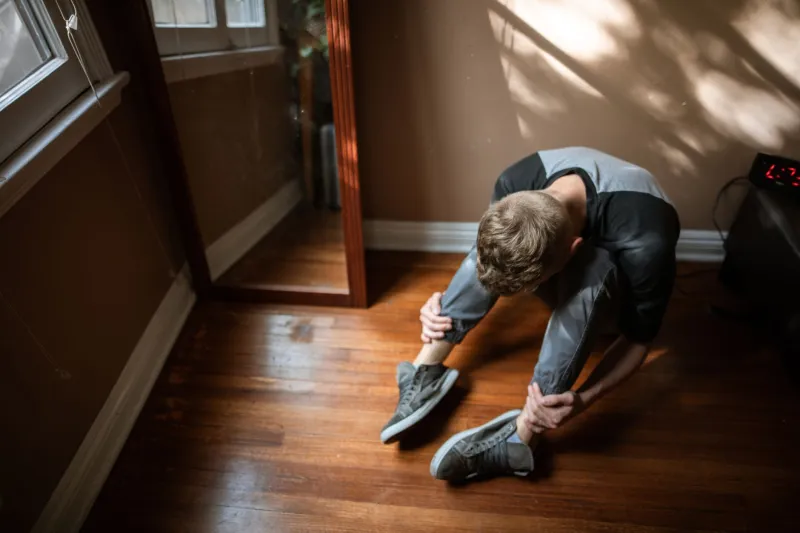
She was eleven years old the first time her teacher grabbed her leg and wrenched it higher than her hip could safely go. Not to correct her. Not to guide her. To prove a point — that her body was a problem to be solved, and the teacher was the only one with the answer.
That dancer, now thirty-four and living in Portland, Oregon, asked to be identified only as Maya. She hasn't set foot in a traditional studio in six years. "I still flinch when someone raises their voice near me," she says. "I didn't connect that to dance training until I was deep into therapy."
Maya's story isn't rare. Across the United States, a quieter reckoning is underway — one that doesn't always make headlines but is reshaping how dancers, educators, and mental health professionals think about what we've normalized inside the studio walls.
The Damage That Doesn't Show Up on an MRI
When we talk about dance injuries, we tend to think about stress fractures, torn ligaments, overworked joints. The physical toll is well-documented. But a growing body of research — and a chorus of survivor voices — is making clear that some of the deepest wounds are the ones you can't see on a scan.
Dr. Renata Osei, a licensed clinical psychologist in New York City who specializes in performing arts trauma, describes a pattern she sees repeatedly in her practice. "Dancers who trained under authoritarian or emotionally abusive instructors often develop a fractured relationship with their own bodies," she explains. "They've been conditioned to override pain, suppress emotion, and defer to external authority. That conditioning doesn't just disappear when they leave the studio."
The symptoms can look like anxiety, perfectionism, or chronic self-criticism. They can also show up as disordered eating, an inability to receive feedback without spiraling, or a deep-seated belief that rest is failure. For many dancers, these patterns feel like personality traits — not the residue of years of psychological conditioning.
"The hardest part of this work," Dr. Osei says, "is helping someone recognize that what they've always thought of as discipline was actually a trauma response."
"It Was Just How Things Were Done"
One of the most insidious features of abusive training environments is how thoroughly they normalize themselves. Yelling, body-shaming, physical correction without consent, humiliation in front of peers — these tactics have been passed down through generations of dance pedagogy as if they were simply part of the craft.
Marcus, a 28-year-old former ballet student from Atlanta, remembers being told at age thirteen that his body was "wrong" for dance. His teacher said it casually, in front of the whole class. "I internalized that for over a decade," he says. "I thought I was lucky to have someone pushing me that hard. It took me until my mid-twenties to realize I'd been told, over and over again, that I wasn't enough. And I'd believed it."
This kind of emotional abuse often goes unreported — not because dancers don't recognize the harm, but because the culture actively discourages them from naming it. Complaining about a tough teacher is framed as weakness. Leaving a program is treated as giving up. And parents, who often sacrifice enormously to fund their child's training, can be reluctant to rock the boat.
"There's a mythology around the 'hard but brilliant' teacher," says Jess Flores, a somatic therapist based in Los Angeles who works with dancers and other performing artists. "We've romanticized the idea that great art requires suffering. But what we've actually been doing is producing a generation of artists who are scared of their own instincts."
Reclaiming the Body
For survivors, the path back to movement is rarely straightforward. Some leave dance entirely. Others find their way back through alternative forms — contact improvisation, somatic movement practices, community dance classes built around consent and curiosity rather than correction and competition.
Maya found her re-entry point through a trauma-informed dance class offered by a community arts nonprofit. "The teacher asked us at the start of every session what we needed," she recalls. "Nobody had ever done that. I cried the first time she said it."
Flores emphasizes that healing isn't just about finding a gentler class. It's about rebuilding the internal relationship between a dancer and their own body — a relationship that abusive training systematically dismantles. "So much of this work is about relearning how to listen to yourself," she says. "To trust the signals your body is sending instead of overriding them."
Somatic approaches, which center the body's physical sensations as a gateway to emotional processing, have become an increasingly popular tool in this space. Practitioners trained in methods like Somatic Experiencing or Body-Mind Centering are seeing more and more dancers in their practices — people who spent years learning to perform emotion without ever being allowed to actually feel it.
What Studios and Companies Need to Change
Individual healing is essential. But survivors and advocates are clear: personal recovery isn't a substitute for structural accountability.
The dance world in the US has been slow to implement the kinds of safeguarding policies that other youth-serving institutions have adopted. Background checks, mandatory reporting training, clear codes of conduct, and accessible reporting mechanisms are still far from universal — especially in small, independent studios where a single teacher holds enormous power over young students.
"The industry loves to celebrate individual resilience," says Dr. Osei. "But resilience shouldn't be a requirement for surviving your training. We need systems that protect people before they're harmed, not just resources for healing after the fact."
Organizations like the Dance/USA Task Force on Dancer Health have begun pushing for broader adoption of trauma-informed teaching practices, but progress has been uneven. Some companies and conservatories are leading the way; others are still operating on the assumption that nothing is broken.
For Marcus, the change he wants to see is simpler to articulate than it is to achieve. "I want young dancers to grow up knowing that their body belongs to them," he says. "That no one — not even a brilliant teacher, not even someone who really believes in them — has the right to make them feel like they're not enough."
Moving Forward, Together
The conversation happening right now in dance studios, therapy offices, and online communities across the country is uncomfortable. It asks us to look critically at traditions we've revered, at teachers we may have loved, at systems that produced beautiful art alongside real harm.
But it's a conversation worth having. Because the goal of dance — the real goal, underneath the technique and the competition and the curtain calls — has always been to connect people to themselves and to each other. That can't happen when dancers are too scared, too broken, or too conditioned to feel anything at all.
Movement should be a place of possibility. For too many dancers, it's been a place of survival. The work of changing that starts with telling the truth about what happened — and refusing to let it keep happening.