New Rules, New Power: How Dancers Are Rewriting the Contract on Consent
For a long time, the unspoken rule in professional dance was simple: you endure. You endure the corrections that cross into cruelty. You endure the touch you didn't ask for. You endure the director who treats your body like a prop in his vision. And you do it quietly, because the alternative — speaking up, pushing back, walking away — feels like professional suicide.
That calculus is changing. Slowly, imperfectly, and not without resistance, but it is changing.
In the years since the #MeToo movement cracked open conversations across the arts, dancers have been doing something more than talking. They've been building — drafting new policy language, demanding contract amendments, establishing accountability frameworks, and creating the kinds of institutional guardrails that the dance world never thought it needed. Or maybe more accurately: the kinds of guardrails that people in power never wanted.
What "Change" Actually Looks Like on Paper
One of the most concrete shifts has happened at the contractual level. Dancers who work under Actors' Equity Association agreements have seen new provisions addressing physical contact protocols, mandatory bystander training, and clearer grievance pathways. But it's not just the unions — independent companies and even mid-size regional studios are starting to formalize what used to be handled through whisper networks and crossed fingers.
Choreographer and educator Dominique Frazier, who runs a contemporary dance collective out of Atlanta, rewrote her company's entire rehearsal agreement two years ago. "We had a standard contract that said nothing about touch, nothing about power dynamics, nothing about what happens when someone feels unsafe," she says. "It was basically a document that protected the work, not the workers."
Her new agreement includes explicit consent language for contact-based choreography, a designated third-party advocate dancers can approach outside the chain of command, and a clause that allows any company member to pause rehearsal if they need to address a concern — without explanation, without penalty. "It felt radical when we first introduced it," Frazier says. "Now it just feels like basic human decency."
The Intimacy Coordinator Effect
The arrival of intimacy coordinators in dance — a role borrowed from film and theater — has been one of the most visible markers of this shift. Where these professionals once seemed like an anomaly in the rehearsal room, they're increasingly being written into production budgets for works that involve partnering, contact improvisation, or narratively charged physical material.
New York–based intimacy coordinator and former ballet dancer Simone Tran has worked with a growing roster of companies across the country. She's quick to point out that her role isn't just about preventing the worst-case scenario. "Most of what I do is help companies build a culture where people feel like they can say 'this doesn't feel right' before it becomes a crisis," she explains. "The value is in the everyday — the rehearsal where someone's boundary is creeping, the moment where a choreographer's habit becomes someone else's discomfort."
Tran says she's seen genuine openness from a new generation of choreographers who want this kind of support. But she's also encountered resistance from established figures who view the entire framework as an attack on artistic authority. "There's still this idea that the choreographer's vision is sacred," she says, "and that any limit placed on the process is a limit placed on the art. That's a belief system we're actively dismantling."
The Studio as a Site of Reckoning
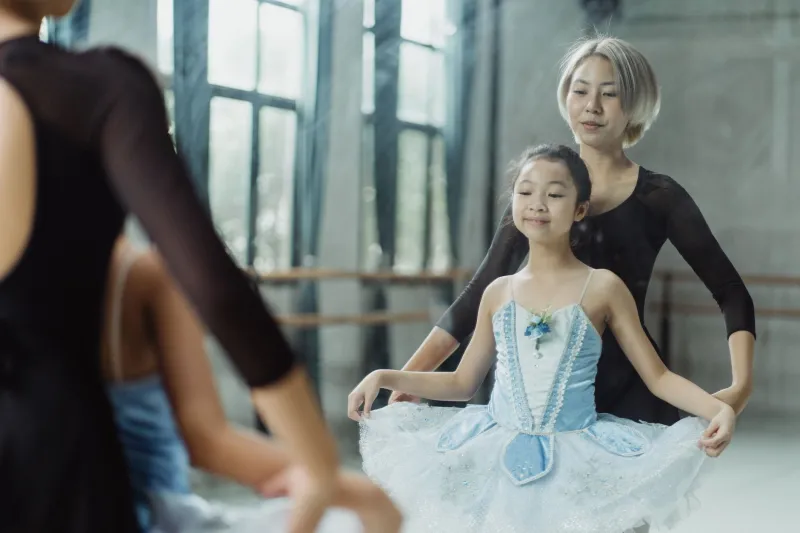
The conversation isn't limited to professional companies. Dance studios — particularly those training young people — are increasingly under scrutiny for the cultures they cultivate. Parents, students, and former dancers have spent years documenting the ways that pre-professional training environments can normalize boundary violations under the banner of discipline and dedication.
Organizations like the Safe Sport movement, which has expanded its reach beyond Olympic athletics to include performing arts training, are pushing studios to adopt written codes of conduct, mandatory reporting policies, and regular training for instructors on appropriate physical correction. The resistance, advocates say, often comes from studio owners who've run their programs a certain way for decades and see policy reform as an implicit accusation.
"It's not an accusation," says child protection advocate and former competitive dancer Leila Moreno. "It's an invitation to do better. Most of the harm that happens in studios isn't predatory — it's careless. It's a culture that never stopped to ask whether what it was doing was okay."
Who Gets to Feel Safe?
It would be incomplete to talk about safety and consent in dance without naming the inequities that shape who gets protected and who gets left out. Dancers of color, LGBTQ+ artists, and those working in underfunded genres have consistently reported that the protections being built at the institutional level don't always reach them.
Contemporary dancer and activist Marcus Webb has been vocal about the ways that power in the dance world still flows along racial and economic lines. "The conversations happening in the big ballet companies or the well-funded modern dance world — those are real and important. But there are whole communities of dancers who don't have union protections, who work in informal spaces, who can't afford to walk away from a bad situation because there's no other situation waiting for them," he says. "Consent culture has to be built for everyone, or it's just a policy document for the people who already had the most power."
The Work Isn't Done — But the Work Has Started
The dance world is not fixed. There are still choreographers wielding unchecked authority. There are still studios where the culture of silence runs deep. There are still dancers who don't know their rights, or who know them and don't feel safe exercising them.
But there's something different in the air now — a generation of artists who entered the field after #MeToo, who never internalized the idea that suffering is the price of artistry, who are building companies and studios and collectives with different values baked in from the beginning.
Dominique Frazier puts it plainly: "The dancers coming up now have seen what the old way cost people. They're not interested in paying that price. And honestly? The work they're making is better for it. When people feel safe, they take real risks. That's when the art gets interesting."
That might be the most radical argument of all — not just that safer studios are more ethical, but that they're more creative. That when dancers stop spending energy managing fear, they have more left over for the thing they came to do: move.