They Know Before You Do: The Quiet Art of What Dance Teachers Read in Your Body
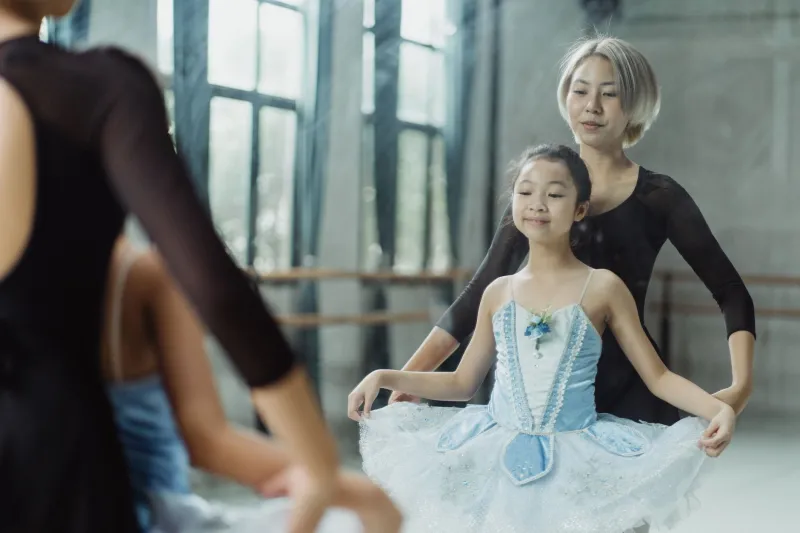
You walk into the studio. You haven't said a word. You haven't even put your bag down yet. And your teacher already knows something's off.
Maybe it's the way your shoulders are riding up near your ears. Maybe it's the slight drag in your right foot, or the way you're holding your jaw like you're bracing for something. Whatever it is, they clocked it before the warm-up music even started. That's not magic. That's years of looking.
The best dance teachers in this country carry a kind of knowledge that never appears in any curriculum guide. It isn't something most of them were formally taught — it's something they developed, slowly, over thousands of hours of watching human bodies move, compensate, protect, and reveal. And the wild thing is, most students have no idea it's happening.
Reading the Room Without Saying a Word
Veteran educators across dance disciplines will tell you the same thing: a body in motion is always telling a story. The student who arrives with perfect turnout in their right foot and a half-degree less in their left isn't just showing a physical asymmetry — they might be showing you a dominant side that's been overworked, an old ankle injury they never mentioned, or a postural habit built from years of sitting with their weight shifted to one side.
The teacher sees all of it. What they choose to say — and when, and how — is where the real artistry begins.
"You have to earn the right to name what you see," says one contemporary dance educator based in Chicago who has been teaching for over two decades. "If you walk up to a kid on day one and say, 'Hey, you're holding your breath every time you transition,' they're going to shut down. You have to build the relationship first. The observation comes before the conversation."
That gap — between what a teacher sees and what they say out loud — is where a lot of the most meaningful mentorship actually lives.
Posture as Biography
Experienced teachers often describe the body as a kind of autobiography. The way a student carries their chest — whether it's lifted with ease or caved inward like a parenthesis — speaks to something that goes far beyond flexibility. Rounded shoulders in a young dancer might signal shyness, or a growth spurt they haven't caught up to yet, or a home environment where taking up space didn't feel safe.
None of this is diagnosis. Teachers are quick to draw that line. They're not therapists, and the good ones know it. But they are trained observers of the human form in motion, and what they notice shapes everything about how they approach a student.
A dancer who flinches slightly when corrected by touch isn't just sensitive — they might need a teacher who leads with verbal cues first, who asks permission before adjusting, who builds physical trust slowly. A student who charges through combinations without pausing to feel them might be performing competence rather than developing it. A teenager who stares at the mirror with an expression that looks like contempt? That's worth paying attention to.
None of these things get written on an intake form. All of them inform how a thoughtful teacher moves through the room.
The Ethics of Seeing
Here's where it gets complicated. The ability to read a student's body so precisely is a profound responsibility, and not every teacher handles it well.
When this skill is used with care, it creates the conditions for students to discover things about themselves at exactly the right moment — not too early, not too harshly, but gently and with full support. A teacher who notices a student's movement patterns tightening under pressure might design exercises that gradually expand their comfort zone without ever saying, "You freeze when you're scared." Instead, the student just finds, over time, that they don't freeze as much anymore. That's the invisible curriculum at work.
But when this same observational power is wielded carelessly — or worse, weaponized — it can do real damage. The teacher who publicly names a student's insecurity as weakness, or who uses their diagnostic read to embarrass rather than empower, is misusing something that was meant to serve the student. The dance world has a long history of this, and it's one we're still reckoning with.
The difference between a teacher who shapes a student's self-perception for the better and one who quietly distorts it often comes down to intention, and to whether the teacher has done their own inner work.
What Students Don't Know They're Learning
Here's the part most dancers only understand in retrospect: the invisible curriculum isn't just about what teachers see. It's about what they're teaching students to see in themselves.
Every time a teacher designs a combination that addresses a specific limitation without naming it, they're giving the student a chance to feel their way into a new understanding of their body. Every time they offer a correction as an invitation rather than a verdict, they're modeling a relationship with the body that is curious rather than critical. Every time they ask "how did that feel?" instead of "did you see what you did wrong?" they're redirecting attention inward.
Over time, students who've been taught this way start doing it themselves. They begin to notice their own patterns. They develop a felt sense of where they brace, where they rush, where they go on autopilot. They become, in other words, their own best teachers.
That's the whole point. The goal of the invisible curriculum isn't to keep students dependent on a teacher's eye — it's to develop their own.
A Different Kind of Intelligence
We spend a lot of time in the dance world talking about physical intelligence: flexibility, strength, coordination, musicality. We talk less about the relational intelligence that makes great teaching possible — the capacity to observe without projecting, to hold what you see without rushing to fix it, to understand that a body in the studio is never just a body in the studio.
The teachers who do this work well are often the ones students remember for the rest of their lives. Not because they were the strictest, or because they had the most impressive credentials, but because they made students feel genuinely seen — even when, especially when, they never said exactly what they were seeing.
That's a rare thing. And it's worth naming, even if the curriculum itself never is.