Second in Line, First in Range: What Understudies Know About Dancing That Leads Never Learn
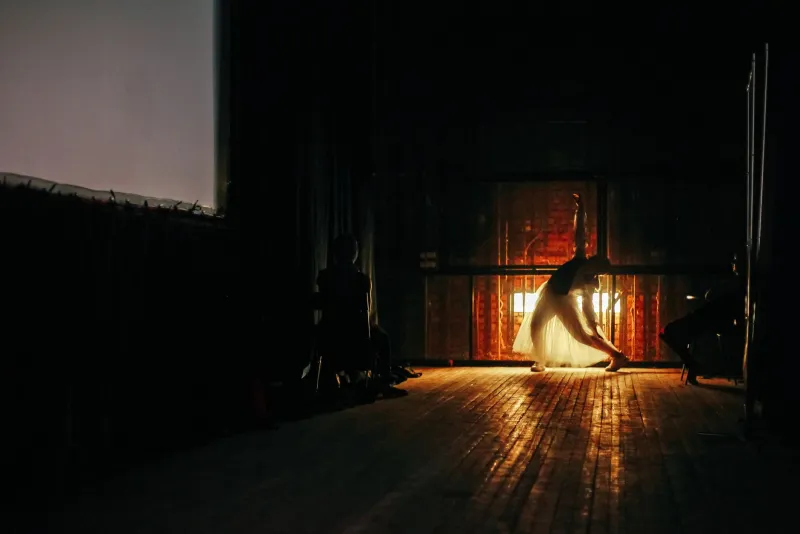
There's a moment every understudy knows. You're standing in the wings, fully warmed up, completely prepared, watching someone else do the thing you've memorized down to the last breath. You know every count, every weight shift, every intention behind every gesture. And you're not dancing.
For a long time, the industry treated that experience as a consolation prize — something to survive on the way to something better. But talk to enough working dancers, and a different picture starts to emerge. The understudy role, it turns out, isn't a detour. For a lot of dancers, it's the education.
The Map You Build When You're Not the Destination
When you're cast as the lead, your job is to inhabit one role completely. When you're the understudy, your job is to understand everything — not just the steps, but the why behind them. You're learning the choreography from the outside in, watching how it lands on a body that isn't yours, noticing what works and what the choreographer keeps adjusting.
"I learned more in two seasons of understudying than I did in the four years before that," says Dominique Reyes, a contemporary dancer based in Chicago who spent three years in a regional dance company before landing her first principal role. "I was absorbing everything — the lead's choices, the alternate's choices, what the director was asking for in notes. I was basically getting three educations at once."
That kind of multi-angle learning is hard to replicate when you're the one in the spotlight. Leads are focused on execution. Understudies are focused on comprehension. And comprehension, over time, builds something that execution alone can't — genuine artistic intelligence.
Adaptability as a Survival Skill
Here's something choreographers don't always say out loud: they love working with dancers who've understudied extensively. Not because those dancers are more obedient, but because they're more responsive.
"An understudy has to be ready to go on with 20 minutes' notice," says Marcus Bell, a New York-based choreographer who has worked with several major contemporary companies. "That means they've had to stay present in a way that a lead sometimes doesn't have to. They can't coast. They can't go on autopilot. Every rehearsal has to matter because they never know when it's their run."
That enforced presence creates a kind of technical sharpness that's genuinely difficult to manufacture any other way. When you've spent months watching a role and only occasionally performing it, you don't take a single show for granted. You walk into the lights already grateful, already awake.
The Psychological Edge Nobody Talks About
Delayed gratification is a weird thing to celebrate in a culture that's obsessed with the overnight success narrative. Social media doesn't exactly make space for the story of the dancer who waited three years, kept showing up, and quietly got extraordinary in the meantime. But that story is everywhere in professional dance, and the dancers living it are developing something that's genuinely hard to teach: tolerance for uncertainty.
"I used to think waiting was wasted time," says Jaylen Park, a musical theater performer who spent two years as a swing on a national tour before getting his first featured role. "Now I think it was the most important time of my career. I learned how to be okay not knowing. And in this industry, that's basically a superpower."
Psychologists call it distress tolerance — the ability to sit with discomfort without it derailing your performance. For dancers who've understudied, that tolerance gets built through repetition. Every night you don't go on is practice. Every morning you show up anyway is a deposit into a reservoir of resilience you'll draw on for the rest of your career.
What the Body Learns From Watching
There's also something happening physically that doesn't get enough attention. Motor learning research has shown that mental rehearsal — vividly imagining movement — activates many of the same neural pathways as actually performing it. Understudies, who spend enormous amounts of time watching and internally mirroring choreography they know by heart, are essentially rehearsing constantly, even when they're standing still.
The result? When they finally do perform, their bodies often move with a kind of settled confidence that surprises everyone, including themselves. The role has been lived in so many times in the imagination that the physical performance feels less like a debut and more like a homecoming.
"The first time I went on for the lead, I wasn't nervous," Dominique Reyes recalls. "I was ready in a way I'd never been ready for anything. My body knew exactly what to do. I'd been doing it in my head for eight months."
The Industry Is Starting to Notice
Something is shifting, slowly, in how the dance world talks about the understudy track. More choreographers are openly crediting their swings and alternates in program notes. More companies are creating structures that give understudies actual stage time, not just the occasional emergency slot. And more dancers are reclaiming the narrative — choosing to see the understudy experience not as a sign that they weren't good enough, but as evidence that they were trusted with something genuinely demanding.
Because here's the thing: not everyone gets asked to be an understudy. You have to be dependable, coachable, and technically solid enough to step in for multiple roles on short notice. That's not a participation ribbon. That's a professional credential.
Moving Forward Without Looking Back
If you're currently in an understudy position and you're frustrated — that's valid. The frustration is real, the longing is real, and nobody should tell you to just be grateful. But while you're in it, consider what you're actually building.
You're building range. You're building adaptability. You're building a relationship with the work that doesn't depend on being seen to feel meaningful. You're learning how to carry a role in your body before you ever have to carry it on a stage.
And when your moment comes — and for most dancers who stay in it long enough, it does come — you won't just be ready. You'll be formed. Shaped by the waiting, sharpened by the watching, and carrying a kind of depth that only time and patience and a whole lot of unwitnessed preparation can produce.
The lead might get the flowers on opening night. But the understudy often gets something more lasting: a career built on a foundation that doesn't crack under pressure, because it was tempered by it.