Somebody Else's Steps: How Learning Another Dancer's Role Can Transform Your Own
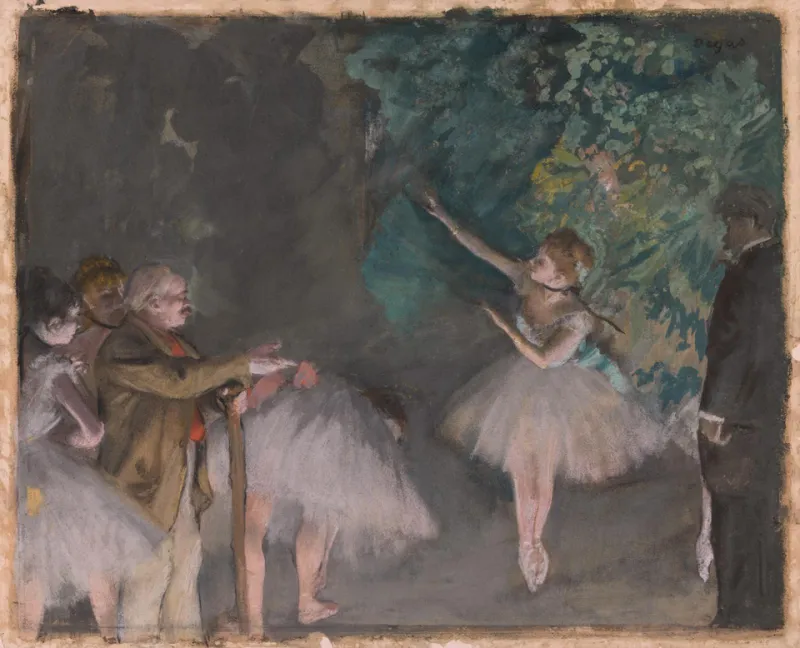
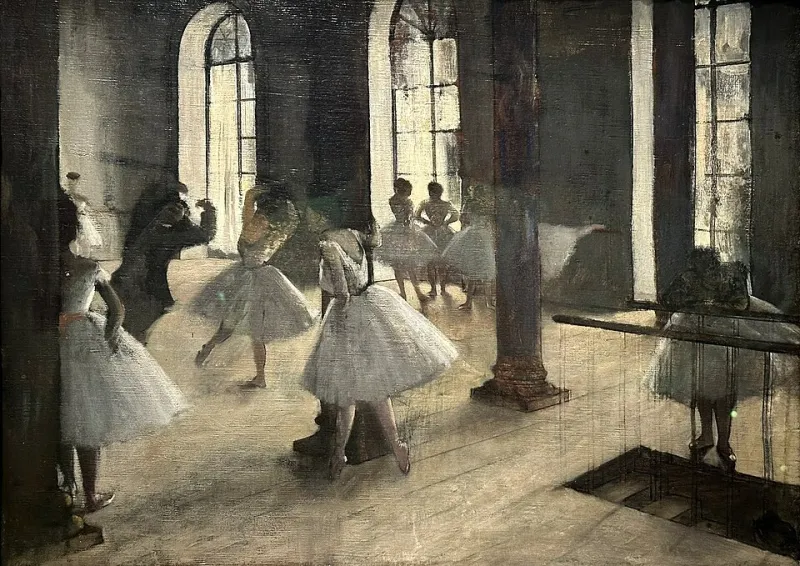
Photo: Edgar Degas, Public domain, via Wikimedia Commons
Ask any understudy what the job feels like and you'll probably get a complicated answer. There's the pride of being trusted, sure. But there's also the strange, humbling experience of learning movement that was never designed with your body in mind — steps shaped around someone else's proportions, instincts, and artistic voice. It's uncomfortable in the best possible way.
And according to a growing number of working dancers, that discomfort is exactly the point.
The Body Learns Differently When It Has to Adapt
When you're handed choreography built for someone else, your muscle memory doesn't get to take shortcuts. You can't rely on habit. You have to actually think — about weight distribution, about timing, about why a particular sequence of movements makes sense for a body that isn't yours.
Jasmine Reyes, a contemporary dancer based in Chicago who has covered roles in three different companies over the past six years, describes it as "learning a second language in your bones." She spent a full season understudying a principal dancer whose movement style leaned heavily on contraction and grounded weight — a stark contrast to Jasmine's naturally airy, extension-forward technique.
"I had to figure out how to make those shapes honest," she says. "I couldn't just copy her. But I also couldn't make it all about me. It forced me into this middle space where I was actually discovering things about my own body I'd never noticed before."
That middle space, it turns out, is where some of the most meaningful technical growth happens.
Versatility as a Career Strategy
In an industry where contracts are short, companies downsize, and artistic directors change direction with the seasons, dancers who can move fluidly between roles are simply harder to cut. That's not cynicism — it's math.
Marco Delgado, a New York–based ballet dancer who has performed with two mid-size regional companies, started covering corps and soloist roles simultaneously early in his career almost by accident. A rash of injuries in his first season meant the company needed someone who could step into multiple spots on short notice. He said yes every time.
"At first it felt like I was being asked to do extra homework," Marco admits. "But then I started getting cast more. Not just as a backup — actually cast. Because the artistic director had seen me inhabit all these different styles and knew I could handle whatever she threw at me."
This kind of adaptability doesn't just keep dancers employed. It keeps them interesting to work with, which in the long run matters just as much.
The Psychology of Stepping Into Someone Else's Skin
There's an emotional dimension to understudying that doesn't get talked about enough. Learning a role that belongs — at least in the eyes of the company and the audience — to someone else requires a particular kind of ego flexibility. You have to care enough to do the work with full commitment while simultaneously holding it loosely.
Dance psychologist Dr. Erin Callahan, who works with performers in the Philadelphia area, sees this dynamic play out regularly with her clients. "The dancers who struggle most with understudying are often the ones who experience it as a threat to their identity," she explains. "But the ones who thrive tend to reframe it as research. They're not losing themselves in the role — they're expanding what they're capable of."
That reframe can take time. But dancers who make it through the discomfort often describe a new kind of artistic confidence on the other side — one that isn't tied to a specific part or a specific style, but to a deeper trust in their own capacity to figure things out.
What the Choreography Teaches You About Itself
There's something else that happens when you learn a piece from the inside out, especially when you're coming at it from a different angle than the person it was made for. You start to see the architecture of the choreography in ways that a principal dancer sometimes can't — because you're not inside the creative relationship that built it.
Sophia Nkrumah, a modern dancer and emerging choreographer in Atlanta, spent two years as a swing dancer with a touring company before she started making her own work. She credits that experience with fundamentally changing how she thinks about structure.
"When you're learning eight different tracks, you start to see the whole piece differently," she says. "You notice the patterns, the logic, the places where the choreographer made a choice that only works because of one specific person's quirks. It made me a smarter choreographer because I learned what it feels like to be on the receiving end of decisions that weren't made with me in mind."
For Sophia, understudying wasn't a consolation prize. It was, unexpectedly, the most comprehensive choreographic education she ever received.
Rewriting the Narrative Around 'Second'
The word understudy carries baggage. American theater and dance culture tends to treat it as a lesser position — the person who waits, who watches, who only gets their moment when something goes wrong. That framing does a disservice to the actual skill involved and to the dancers who do the work with full professionalism and zero guarantee of a spotlight.
But that narrative is starting to shift, at least in some corners of the dance world. More choreographers are deliberately building productions with rotation in mind, casting multiple dancers in the same role from the start and letting each bring their own interpretation. Companies like Batsheva and several contemporary dance organizations in the US have experimented with this model, and dancers who've worked within it describe it as creatively liberating.
When stepping into someone else's role is treated as a legitimate artistic act rather than a contingency plan, the whole dynamic changes. The dancer stops waiting to be seen and starts doing the work of being fully present — which, in the end, is what dancing has always been about.
The Long Game
Jasmine, Marco, and Sophia all landed in different places in their careers, but they share one thing: none of them would trade the years they spent learning other people's choreography. Not because it was easy, and not because it always felt fair. But because it made them the kinds of dancers who can walk into almost any room and figure out how to move.
In an industry that demands constant reinvention, that might be the most valuable skill there is.